Commercial Waste in Hackbridge

Commercial waste in Hackbridge needs a practical service that keeps on top of everyday business rubbish without disrupting trade. We collect and remove a wide range of non-domestic waste, helping offices, shops, studios, workshops and other premises clear out regular rubbish, bulky items and mixed refuse in a straightforward way. The aim is to make disposal simpler, with the right handling for the type of material and the amount that needs moving.
Our commercial waste removal service is built around scheduled or one-off clearances that suit different business routines. That may include general refuse, packaging, broken office items, display materials, unwanted stock, or items that have reached the end of their usable life. For businesses that need a tidier, more manageable site, this can be a practical way to keep waste moving off premises and out of work areas.
Use the sections below to see how the service can be arranged, what kinds of commercial rubbish are commonly dealt with, and the options that can help you choose the most suitable clearance. If you are comparing disposal routes, you can also review pricing and quote information and then request a quotation when you are ready.
Business waste collections for day-to-day rubbish
Our business waste collections are aimed at regular rubbish streams that build up during normal operations. That includes packaging, office bagged waste, mixed lightweight refuse and other routine items that are not suited to standard household disposal. The service can be used for premises that need help clearing waste at sensible intervals, whether that is part of a planned tidy-up or a more consistent removal pattern.
Different workplaces produce different waste types, so it helps to separate items before collection where possible. A simple sort can reduce handling time and make disposal decisions clearer. If your waste includes a mix of general rubbish and reusable goods, the distinction matters because each item may need a different destination. Where a business is unsure how to categorise a load, it is usually better to describe the contents plainly than to overcomplicate it.
What is commonly included
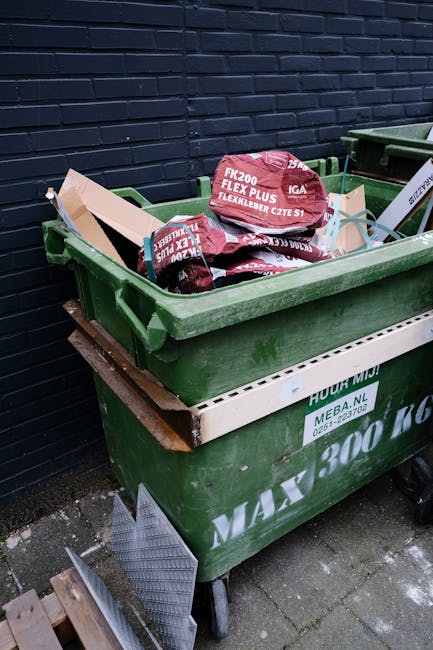
Typical commercial waste can include office paper waste, cardboard, shrink wrap, packaging, small broken furnishings, desk chairs, shelving components and other items that no longer have a place in the working environment. Some businesses also need help with shopfit debris or leftover materials after a room is reorganised. For broader mixed loads, our team can keep the removal process simple while still treating the contents appropriately.
Office waste and clearance of work areas

Office waste often combines everyday rubbish with surplus equipment and redundant furniture. Desks, filing units, chairs, monitors, old stationery stock and packaging from deliveries can all occupy valuable space when they are no longer needed. A focused office clearance can help remove these items together so that work areas can be re-used, reorganised or prepared for a refit without unnecessary clutter.
We also handle clear-outs where the contents are not all the same. A business may have some items that can be reused or relocated, alongside other items that are ready for disposal. That is one reason it is helpful to think about the clearance in layers: what stays, what moves elsewhere and what needs removal. This approach supports cleaner decision-making and can make the load easier to handle on the day.
Office waste removal is often more efficient when the load is described accurately in advance. A short list of the main items is usually enough, especially if there are bulky desks, awkward furniture pieces or mixed office contents. If you are arranging a larger clearance, clear access to the waste and a brief note on any restrictions can help the collection run in a tidier order.
Retail, trade and mixed commercial clearances

Retail units, trade counters and small commercial premises can accumulate waste that is varied in both size and material. That might involve packaging, damaged stock, point-of-sale fixtures, light display units, storage items or surplus materials left over after a stock rotation or reorganisation. A mixed commercial clearance helps when the contents are too varied for a single simple category and need sensible sorting before they are removed.
For many businesses, the useful part of a clearance service is not just the removal itself but the way different items are handled together. Items that are still usable may need to be kept separate from waste items, while heavier pieces may need to be broken down for safe moving. That is particularly useful where work areas are tight or where access to the waste is limited to specific times.
If you are planning a shop or workplace clear-out, it can help to identify any particularly large or awkward items before the removal takes place. That does not mean a full inventory is required every time, only that the main pieces are easier to plan around when they are described in advance. A concise enquiry is often enough to get the process moving.
Office furniture, fixtures and bulky items
Commercial premises often end up with furniture that is still solid enough to move but no longer useful in its current setting. Chairs, tables, storage units, meeting room furniture and reception pieces can all become surplus when layouts change. Bulky items need more careful handling than bagged waste because their size, weight and shape affect how they are taken out and where they can be placed in a vehicle.
Where fixtures or furniture are being replaced, it can make sense to remove the old items once the new layout is confirmed. That keeps the working area clearer and reduces the risk of furniture being shifted more than once. If there are several large items, grouping them by type can help the collection proceed with less confusion, especially if some pieces are to be kept for reuse and others are not.
Planning a bulky load
Bulky commercial loads are easier to manage when the route out of the building is understood. Stairs, narrow corridors, shared entrances and loading restrictions can all affect how the work is carried out. You do not need to provide every small detail, but a brief description of access and the main item sizes can be useful. That helps the removal be planned in a way that suits the property and the contents.
About Hackbridge

Hackbridge is a district in the London Borough of Sutton in south-west London, known for its position along the River Wandle and for a landscape that combines suburban housing with pockets of riverside green space. The Wandle Valley forms an important part of the area’s character, and the river has long shaped the local setting through its meanders, floodplain and connected open spaces. Hackbridge station links the neighbourhood to the wider rail network, and the surrounding streets reflect the layered development of south London suburbs over time. Much of the district sits within a mix of newer residential schemes and earlier townscape, giving it a varied appearance rather than a single uniform core. Local landmarks include the restored Beddington side of the river corridor and the nearby nature areas that sit within the broader valley landscape. The area also has a practical everyday feel, with small local centres, pedestrian routes and community facilities set among residential roads. Hackbridge is closely associated with wider sustainability themes in Sutton, and nearby development has often drawn attention to low-carbon living and greener urban design. Beyond the built environment, the locality is shaped by ordinary neighbourhood life: schools, local shops, green corridors and transport connections that tie it to Carshalton, Wallington and the rest of the borough. Together these features make Hackbridge a distinctly south London place with both a working urban function and a notable natural setting.
Commercial waste in Hackbridge often needs to fit around the rhythm of active premises, shared access points and compact loading spaces. That is one reason a clear, flexible removal arrangement can be useful for offices, shops and other business sites in the district. If you are looking to clear items or keep a premises tidy, contact us to request a quotation.
Hazardous or specialist waste streams
Some business waste cannot be treated as ordinary mixed rubbish. Materials such as chemicals, contaminated items, electrical equipment, oils or other specialist loads need more careful handling and may fall under different rules from everyday commercial refuse. When this kind of waste is present, it is important to identify it clearly so that the right disposal route can be considered from the outset.
Specialist waste is not the same as a standard office or retail clearance, because its contents may require extra sorting, containment or separate documentation. A business should never assume that a problematic item can simply be mixed into a general load. If there is any uncertainty, describing the item rather than guessing the category is the safer starting point. That makes it easier to judge whether the work belongs within the normal commercial waste service or needs a separate solution.
For premises dealing with unwanted specialist items alongside routine rubbish, the two streams can sometimes be discussed together, but they should not be handled as though they were identical. The most useful approach is to separate the ordinary load from anything that needs special attention, then plan the collection around the stricter requirements. This keeps the service organised and helps avoid confusion on the day.
How quotations are put together

Commercial waste pricing depends on the amount to be removed, the type of material, the weight or bulk of the load and the level of access at the property. A tidy pile of bagged waste is not the same as a mixed collection of furniture, packaging and heavier items, so the quote needs to reflect what is actually there. Where the contents are easy to identify, a more precise quotation can often be prepared.
It is usually helpful to mention the main item types, the approximate volume and whether the waste is inside, outside or spread across several rooms. Photographs can also be useful when an enquiry is being assessed, especially for bulky or mixed loads. That said, a description on its own is still valuable, and you do not need to produce a perfect inventory before making contact. The aim is simply to give enough information for the removal to be sensibly priced and planned.
For businesses comparing options, our business waste removal page explains the core service in more detail. If your load is more specific, you may also find the related clearance pages below helpful when deciding what needs to go and how it should be handled.
Related clearance services for commercial premises
Some jobs are best described by the type of item rather than by the overall business premises. In those cases, a narrower clearance service may be a better match. For example, if the work is mainly about furnishings, waste from stock areas or mixed contents from a storeroom, the category of item can matter more than the label on the building.
Our service range includes options for office clearance, furniture clearance and general waste removal, giving customers a clearer route when the load is defined by its contents. Where the job involves heavier or end-of-life household-style items coming from commercial use, separate disposal pages such as mattress and sofa disposal or fridge and appliance removal may also be relevant.
If your premises are generating waste from an overhaul, store refresh or stockroom clear-out, a brief enquiry is often enough to identify the most practical route. Tell us what needs removing, and we can help narrow the service to the right kind of collection. You can also book online if you are ready to move ahead.
Removing waste from different parts of the premises
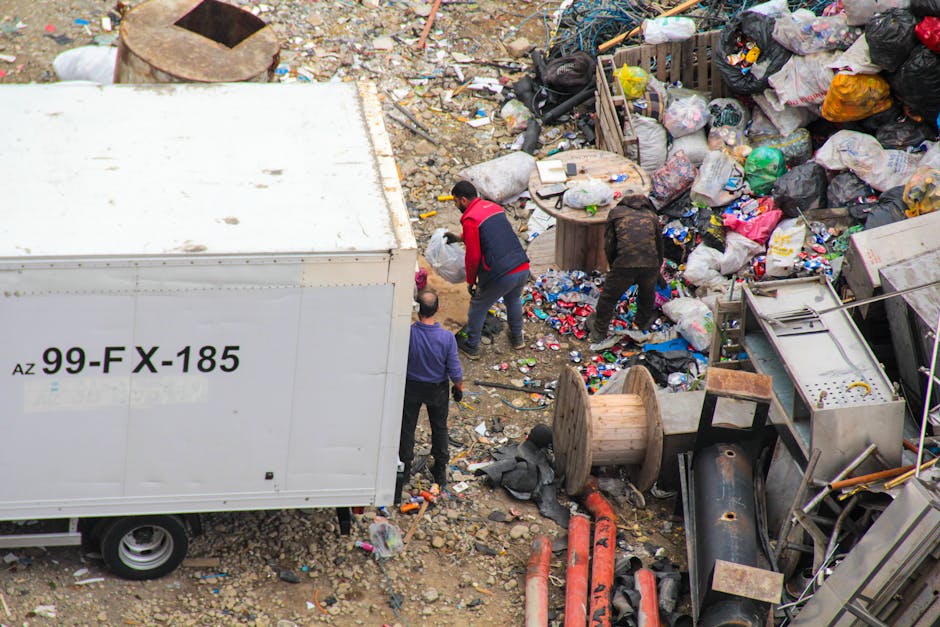
Commercial waste does not always sit neatly in one place. Some loads are gathered from back rooms, some from front-of-house areas and some from upper floors, storage areas or shared access points. The method of removal may therefore need to reflect where the waste is located as well as what it contains. A business with multiple rooms or levels benefits from a service that can work around the actual layout of the site.
This is also where the type of item matters. A room full of cardboard and packaging is handled differently from a room containing heavy furniture or a mixture of redundant stock and broken fittings. The clearer the split between these contents, the easier it becomes to organise the waste logically. That can save time during the collection and reduce the chance of items being overlooked or grouped incorrectly.
Where possible, it helps if the material waiting for removal is kept together in one place. That is not a rule for every job, but it can make the clearance more orderly and may reduce the need for repeated movement around the site. For businesses with changing work patterns, this approach can be especially useful because it allows waste to be gathered as part of the day-to-day routine rather than left to build up in several corners.
Recycling, sorting and responsible disposal
Commercial waste often contains a mixture of materials, and not all of them should be treated the same way. Cardboard, metal, plastics, wood, office equipment and general rubbish each have different disposal considerations. Sorting the load sensibly can improve the chance that suitable items are separated for recycling or other appropriate handling, while the remainder is dealt with as waste.
Responsible disposal starts with recognising which items belong together and which need a different route. That matters for business clearances because a single collection may include several material types at once. Rather than seeing this as a complication, it can be treated as part of a well-organised service: the waste is assessed, grouped and then removed in a way that reflects the contents. This is more practical than forcing every item into one generic category.
Where businesses want to reduce the volume of waste before a collection, removing reusable items from the pile can help. It is sensible to keep anything that still has a use separate from items that are genuinely ready for disposal. That simple step can make the job more efficient and can leave the remaining waste easier to manage, especially when there are bulky or mixed contents.
Getting ready for a collection
Preparation for a commercial waste collection does not need to be complicated. The main things that help are a clear idea of what is being removed, an understanding of where the waste is located and any access notes that might affect the collection. If the items are spread across different rooms or floors, it is useful to know that in advance so the work can be organised sensibly.
A short checklist can make an enquiry easier to handle:
- the main types of waste or items to be removed
- whether the load is bagged, loose, boxed or bulky
- where the waste is stored on the premises
- any access restrictions, such as narrow stairs or shared entrances
- whether any items need to be kept separate from the disposal load
Once those points are clear, it is easier to decide how the collection should be arranged. If you want to compare the service with other disposal options, read more about recycling and sustainability and then send a straightforward request for a quotation when you are ready.